Organizing in Times of Disruption, Past and Present
April 9, 2026 | by NBA Cares
How do communities experiencing disruption organize in order to prevent permanent pain and despair and bring deeper democracy?
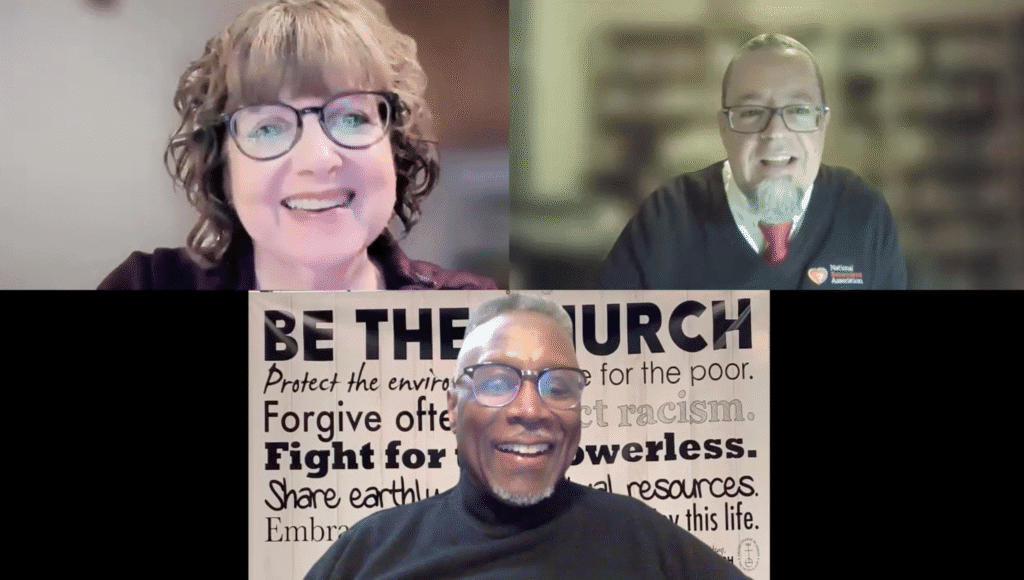
This was the central question behind NBA’s recent webinar “From Montgomery to Minneapolis: Organizing in Times of Disruption.” Hosted by NBA’s Community Engagement program, the conversation connected the Montgomery Bus Boycott to contemporary organizing in Minneapolis, moving beyond preconceived steps or formulas and offering practical lessons for communities seeking justice amid uncertainty.
“Disruption is painful. It interrupts routines, unsettles communities, and exposes fear, grief, and conflict,” said Rev. Angel Luis Rivera-Agosto, NBA’s Community Engagement Senior Coordinator for Justice Initiatives. “But it is also brings strategic opportunities for resistance by interrupting harm and threats to democracy, creating the conditions for broader participation, relationship-building, and engaging in long-term transformation.”
Disruption, Faith, and a Framework for Action
Rev. Rivera-Agosto compared the tension of disruption to the theological image of the cross, describing disruption as a place where suffering is made visible and power is challenged—but also where the possibility of “new life” emerges when communities refuse to let pain become permanent.
He offered three elements for organizing in times of disruption. First is blocking, where the power behind the disruption is confronted and the cause killing the community is named. Next is bridging, which provides healing not by stopping something, but instead when people assemble to carry the weight together. The last is building, which moves the disruption beyond suffering and towards transformation. Rev. Rivera-Agosto shared how these elements were present in both Montgomery 70 years ago and in Minneapolis today, and emphasized that the cycle is repeated because new threats emerge, communities change, and justice work requires both persistence and adaptation.
Montgomery: Bringing Change Through Organized Resistance and Sustained Nonviolent Power
Rev. Dr. Jack Sullivan, Jr., co-president of the Disciples Justice Action Network, reflected on the Montgomery Bus Boycott, a citywide mass protest in Alabama’s capital city starting in December 1955 and continuing for 381 days, ending only after the Supreme Court ruled in December 1956 that segregation on city bus lines was unconstitutional.
“This boycott serves as an essential and foundational case study in social change, demonstrating that organized, nonviolent resistance can successfully dismantle systemic injustice,” remarked Rev. Dr. Sullivan.
The boycott’s enduring legacy, according to Rev. Dr. Sullivan, is not only the legal outcome, but the way ordinary people built an organized, disciplined movement that could withstand retaliation and sustain hope. It featured carpools and volunteer drivers; economic leverage; organizing networks rooted in Black churches and civic groups along with organizations providing leadership and support to the boycott; coordinated communication; a non-violent and moral authority leadership style from such leaders as Martin Luther King, Jr.; and a dual-track strategy of public pressure alongside legal action.
Reverend Sullivan Jr. also provided Ten Understandings for Christian Justice Organizers based on his experience. On that resort, he advised justice advocates to keep rooted in congregational faith. Also, he said that Christian justice organizers are called to practice courageous love and prayer, honor diversity, center those most harmed, build broad coalitions, use their platform boldly, embody justice through concrete, inclusive actions and public learning, care for relationships and well-being, and persevere with forgiveness and hope in God’s enduring kingdom.
Minneapolis: Community Protection, Mutual Aid, and Public Witness
Rev. Dr. Laurie Pound Feille, founder and co-facilitator of Disciples Public Presence, described Minneapolis organizing amid what she called a federal “occupation”—a surge in enforcement framed publicly as addressing welfare fraud but experienced locally as targeted action that stigmatized and endangered Somali neighbors.
Rev. Dr. Pound Feille shared that the shape of Minneapolis resistance today was formed by earlier disruption—especially the aftermath of George Floyd’s murder in 2020. That season revealed both the costs of sustained mobilization and the necessity of shared leadership. “When all of that happened, everybody was trying to do everything,” Rev. Dr. Pound Feille remarked. “Showing up everywhere they could, standing with everybody they could, make sure that the voices that needed to be heard were heard. We learned that we needed each other and that there was no way we could do this alone.”
Community organizers led neighborhood-based candlelight vigils across the city, coordinated presence at key locations, and offered mutual aid networks at schools, congregations, community centers, and local businesses. “Jesus said, love God with every part of your being, and love neighbor as self,” says Rev. Dr. Pound Feille. “This love of neighbor is an understanding that is shared throughout Minneapolis and also cities throughout the country.”
Lasting Impact and Practices for Future Organizers
During a Q&A session, the three speakers were asked how to build unity amid division. They stressed the importance of identifying shared commitments, investing in relationships before a crisis, and taking steps to develop connections that can grow into larger relationships. They also emphasized the need for bold truth-telling and public solidarity to combat misinformation. When asked whether Minneapolis will have the same historical impact as Montgomery, the speakers offered that while both events will be historically significant and sacred examples of people taking risks to stand up to social injustice, the two events differ in both context and scale.
Disruption is Real, But It is Not the End of the Story
In the end, the message coming out of the discussion was both sobering and hopeful: disruption is real, but it is not the end of the story. Communities can organize so that crisis does not become despair—by interrupting harm, carrying burdens together, and building futures that make room for dignity and belonging. “As Martin Luther King, Jr, said,” remarked Rev. Rivera Agosto, “‘The arc of the moral universe is long, but it bends toward justice.’”
You can view the recording of this webinar on NBA’s resource page.