
Tuned Up to Thrive
November 6, 2026 | by NBA Cares
by Rev. Kinsie Tate, LPCC Executive Director of Restore Clergy
You’ve probably heard the phrase “from surviving to thriving”. Maybe you’ve even used it, but what does it really mean and look like within a leadership context?
In our Restoration Fellowship curriculum, we use the metaphor “warning lights” and discuss different “warning light emotions” like fear, anxiety, guilt, apathy, etc. Rev. Hillary Thurston-Cox, a member of our January 2025 cohort, compared it to the warning light indicators in a car. “When you own a car,” she says, “it is important to watch for the so-called ‘idiot lights.’ Those lights that light up the dashboard with warnings such as ‘headlight out,’ ‘add oil,’ or the most terrifying ‘engine light.’”
When these warnings appear in a vehicle, it is taken to a repair shop straight away to resolve the issue. But when these warnings appear in our lives, we don’t always act on them right away and hope that we can continue. More often than not, though, that only makes things worse. For Rev. Thurston-Cox, those ignored warning signs included a hectic schedule, health issues discovered at her wellness exam, exhaustion, and a losing joy in her work. “Ministry training has ingrained in many faithful pastors that our calling is about the care and nurture of others. Following Jesus’ example, we pour ourselves out over and over again. We give up days off, vacations, and time with family to be there for our congregations…we continue driving ourselves with warning lights flashing.”
Do you find yourself in a similar situation, seeing warning lights illuminated in your life but ignoring them and hoping for the best? Here are a few tips to start the process of transitioning from surviving to thriving.
- Model the pace you hope to see. If your program promotes rest but your team is running on empty, people notice. Take your own tune-up first and build in margin for error.
- Refine over time. Favor programs with follow-up and community over single events. Ask: what happens to us and participants three and six months later?
- Measure what matters, gently. Use simple check-ins or well-being assessments to notice small shifts within yourself, your org, and those you serve. Celebrate incremental progress instead of waiting for dramatic transformation. Build in regular reflection and acknowledgment of the good progress that is being made.
- Make room for struggle. Create spaces where honesty about hard seasons is welcomed, not managed. Sometimes the most effective thing we can do is bear witness to struggle without trying to fix it. Struggle is easier to bear when we know we’re not alone.
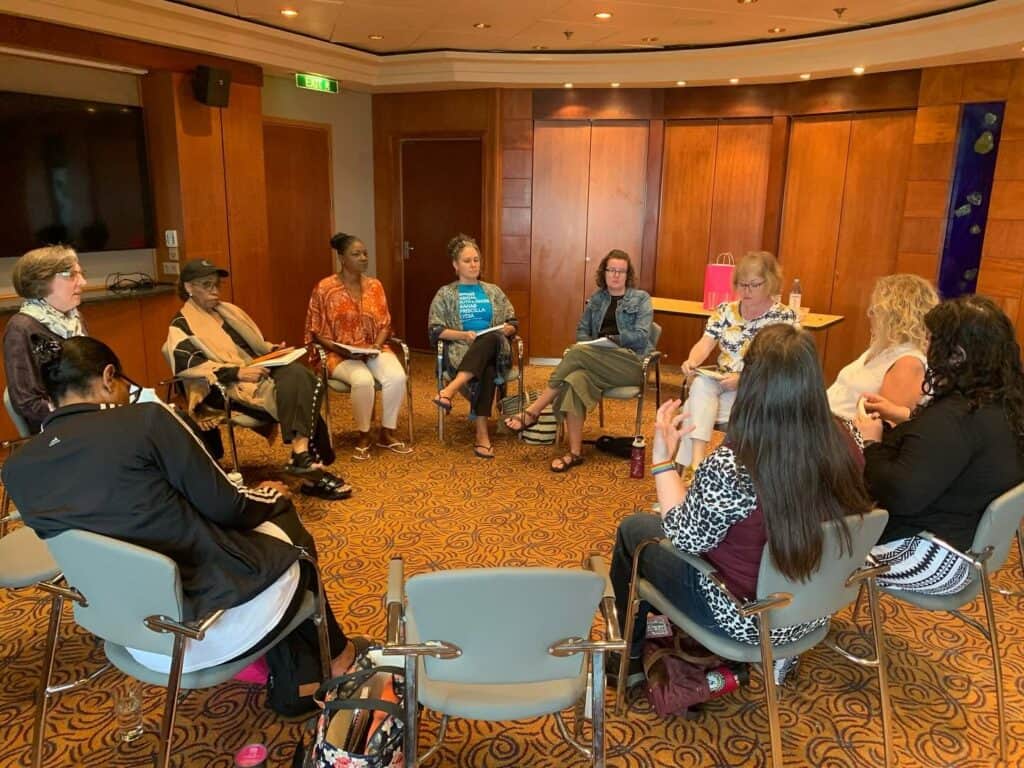
Growth need not be rapid and honestly, slow, steady growth allows us to shift and adapt at a pace that works with our body’s natural rhythms. Rev. Thurston-Cox, for example, gradually saw this growth take place incrementally during her year-long stint in the Restoration Fellowship cohort program. “Growth in this program wasn’t an earth-shattering one-time experience, but instead a step-by-step process that builds resilience. Over time, power poured back into me and I feel grounded and rooted in a way I haven’t since I was first called to ministry. I found practices that feed and nurture my inmost being.”
We have all heard about and probably witnessed rapid and “earth-shattering” change in nature, and it often comes with violence and trauma. A more sustainable way, the way I believe God invites us in to, is growth that is supported, nurtured, and refined over time. The journey of moving from surviving to thriving is just as important as the destination, and I don’t know that you can actually thrive without knowing what it feels like to struggle.
You need not be resigned to a life of survival. There is support and God has called many of us to do that work so that we can co-labor with God to create a world where all might thrive.