A Letter to My Younger Self: 2021-2023 YALE Peer Learning & Wellness Group Legacy Project
November 17, 2026 | by NBA Cares
Introduction:
Have you ever wished you could go back in time and tell your younger self something? Or do you feel sometimes like you could have changed something from your past? Writing a letter to your younger self can be a powerful and transformational experience for anyone. Looking back on your life from the perspective of your current self allows you to reflect on your growth and progress; it can also give you insight into how your journey has allowed you to become the person you are today.
There is a concept in Narrative Therapy called “re-membering,” this is a process of conversations (internal or external with others) shaped by the conception that identity is founded upon an association of life rather than on a core self; in other words, we are not self-made, we are a compilation of many and diverse members composing a whole. The members of our stories can be people, experiences, memories, personality traits, and many more.
Experts on the field say that “re-membering conversations provide an opportunity for people to revise the memberships of their association of life: to upgrade some memberships and to downgrade others; to honor some memberships and to revoke others; to grant authority to some voices in regard to matters of one’s personal identity, and to disqualify other voices with regard to this.”1
Therefore, writing a letter to your younger self has the potential to reconnect you with your past from a place of understanding, compassion, and care. Looking back with care and wisdom can help heal old wounds, gain perspective, and celebrate how far you have come. As a reflective exercise, it can become a source of self-awareness and personal growth.
We recommend doing this activity in a group setting with a profound sense of caution and responsibility, and we suggest that there is some work done in advance to create a safe space where vulnerability can be well-received and cared for. We advise that you consult with a mental health professional in your area or network, or reach out to Rev. Dr. Carla Perkins, our Director of Mental Health & Wellness, to be prepared with some follow-up resources (therapists’ contact, handouts, etc.), given that this exercise has the potential to open oneself to further self-work.
Goals:
As you consider this exercise for yourself or your group, here are some outcomes you may expect—although this may vary from group to group.
- Help you gain perspective on your past. Revisiting memories through the lens of hindsight can bring new understanding and meaning. Writing allows us to reframe past events in a more constructive light.
- Build self-compassion. We often judge our younger selves harshly. Writing from a place of compassion allows you to make peace with the past, recognizing and reconciling with our mistakes or those of others.
- Foster emotional awareness. Remembering and processing memories can help you create awareness of emotions and feelings that may have been dismissed or suppressed. There is power in our story when we tell it.
- Highlights personal strength. Recalling past challenges reminds you of the inner resources and resilience you drew upon. This builds confidence in your ability to overcome present-day difficulties.
Materials:
- Pen and paper or an electronic device
- Time
- Solitude
Instructions:
This is an exercise for anyone! However, just know that this might not be the easiest process, it will require you to be vulnerable to yourself and those who you choose to share with. This is a letter for yourself; you are not writing for others, so just think about what you would want to tell yourself. Also, you can treat this as a living letter, as in it is a letter that never ends, and you can continue writing on it and revising it.
- Dedicate some time in your schedule for this activity. Dedicate as much time as you feel you need to do this exercise, it could be an hour, it could be less, or perhaps you will need to do it in more than one execution. We simply invite you to be intentional about dedicating time for it.
- Find a place where there are no distractions. If listening to specific music helps you, find some conducive music to put you in a calm and relaxed state.
- Choose which age or version of yourself you want to write this letter to—it can be from baby to just a few months ago, or all the above.
- Begin writing! Try not to think much about what you write, as in wanting it to sound grammatically perfect or with excellent articulation, rather let yourself get lost in the writing process.
- Once you finish your letter, read it aloud to yourself (or if done in a group, to your group).
- Journal (or process aloud in the group) your reactions and responses to this letter. Some questions to guide this process can be:
- How was the process of writing this letter for you?
- Was anything stirred in you while writing the letter?
- What emotions, thoughts, and feelings do you notice as you read the letter?
- Can you name some of your personal qualities that you were able to see/find in yourself as you wrote this letter?
- What changed in you after doing this exercise?
- Be open to reach for support if you need it.
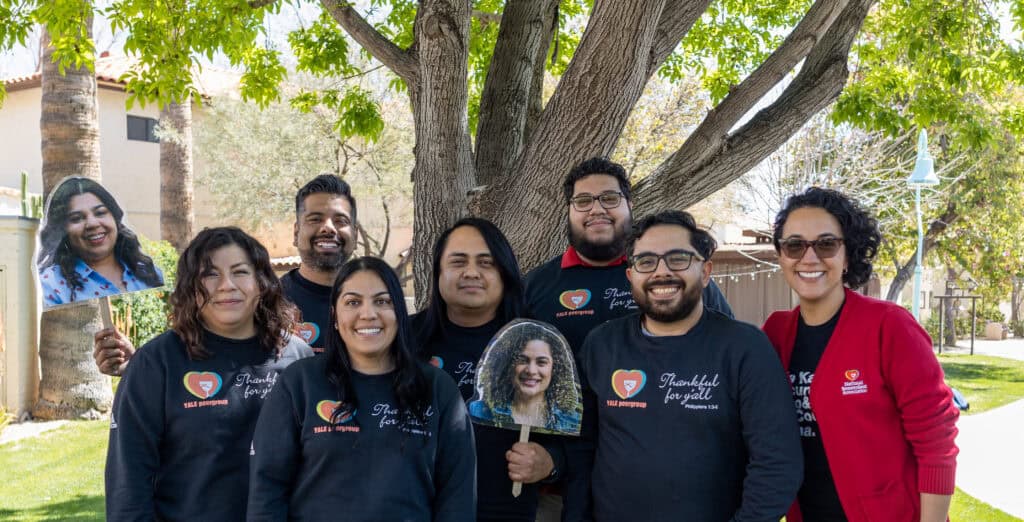
In 2021, the NBA and Obra Hispana partnered to form the Young Adults Leaders Experience Peer Learning & Wellness group. Over a two-year period, this cohort of young adult leaders convened to focus on the intersections of leadership and their multilayered identities—primarily age, race, ethnicity, gender, and language. This peer group provided a supportive space where members found a sense of connection and empowerment, strengthening their leadership within and beyond the Christian Church (Disciples of Christ).